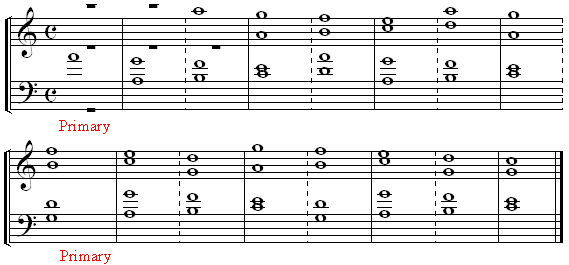
A large Consequent The 2 swings involved here are of DOMINANT/TONIC nature, one in theDiatonic MinorMode and the other in theDiatonic MajorMode, the first with the chordsDm6/Am7, Dm6/Am7, Dm6/Am 7, Dm6/Am7,numberedw4444, and the second with the chordsG7/C6, G7/C6, G7/C6, G7/C, numberedM4444, with the Am7becoming C6, at chord 8, with aMetamorphosis 4, these 2 chords even maintaining the same dispositions throughout the
evolution of the 16 chords. The chords of Dm6being (on the average) a third higher than the chords of G7, the 4 Performance lines end up by being a diatonic second higher in
theantecedent. To indicate this example completely in themajormode, the first 8 chords would be numberedM6*6*6*6*, with the COUNTER/TONIC cells in theShadows, 3 notches higher in the Window, and the last 8 chords remainingM4444.
M6*6*6*6* 4444 Only theM6*6*6*6*has a canonic beginning which could easily be "filled in" by referring to bars 5-6-7. TheM4444section was left complete to show the flow of the canonic lines, but canonic entries could be produced by starting each performance Voice
on the newCOMMON TONE, the note G (BTAS) in chords 9-10-11-12. Both theantecedent and theconsequent used thePrimary Dispositionof the Performing Voices wiith the ascending Orbit Line in the Bass Voice.
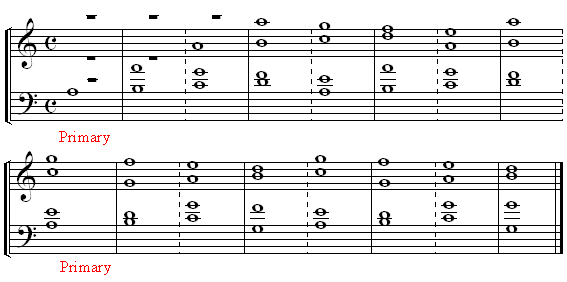
A large Antecedent It is possible to invert each cell of the preceding example to produce weaker cells,
of a TONIC/DOMINANT nature, the antecedent with the chordsAm7/Dm6, Am7/Dm6, Am7/Dm6, Am7/Dm6, numberedw3333, and the consequent with the chordsC6/G7, C6/G7, C6/G7, C6/G, numberedM3333, with the Am7becoming C6, at chord 9, with a Metamorphosis 4. Once again, to indicate this example completely in themajormode, the first 8 chords would be numberedM7*7*7*7*7*, with the TONIC/COUNTER cells in the Shadows, 3 notches higher in the Window, and the last 8 chords remainingM3333.
M7*7*7*7* 3333 Only the antecedentM7*7*7*7*has a canonic beginning which could easily be "filled in" by referring to bars 5-6-7. The consequentM3333section was left complete to show the flow of the canonic lines, but canonic entries could be produced by starting each performance Voice
on the newCOMMON TONE, the note G (SATB) in chords 9-10-11-12. Once again, both theantecedent and theconsequent used thePrimary Dispositionof the Performing Voices wiith the ascending Orbit Line in the Bass Voice. The last 8 chords, being numberedM3333, confirm that this whole 16-chord example is a largeAntecedent which could precede the previousConsequent example in a large 32- chord complete Antecedent-Consequent, abbreviatedaA / cA, aC / cC. You can probably fit these 2 musical examples in the height of the screen and play
one after the other.