MusicNovatory / Applications / Composition / Modulation / M-M


Major To Major

Exterior Modulations
All the Modulations in 1, 2, 3, and 456, were Interior, within a given circle,
     in this case theMajor Modulation Circle with Voice-Leading A.
We will now really modulate, move from this circle to the circle of other Keys,
     starting with the major keys.
All examples will start in the Key of C, but the whole process could evidently be transposed.
     The original Key (in this case the Key of C) would in most cases be established
          with melodic material in this Key and not necessarily with a circle.

From C Major To G Major

This is the most evident Modulation, to the DOMINANT [V].

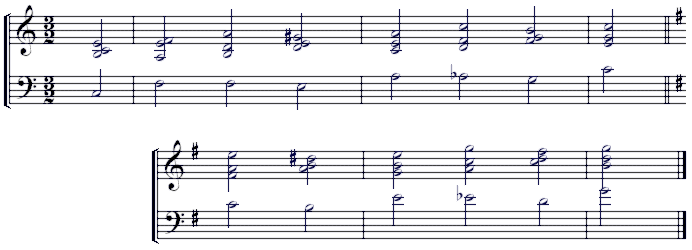
modu4-25a

The 2 first chords in the G circle would normally be (G(+)7 / C(+)7 ),
     but since they are the 2 last chords of the C circle, (G7 / C),
          they have been removed from the G circle.
     Otherwise the G circle is an accurate transposition of the C circle, a fifth higher.

From C Major To E Major

This Modulation is less evident,
     to theDominantized Shadowof the DOMINANT [the majorIII]
The DOMINANT [V] is G,
     whoseShadow(relative minor) is Em,
          whenDominantized, becomes E.

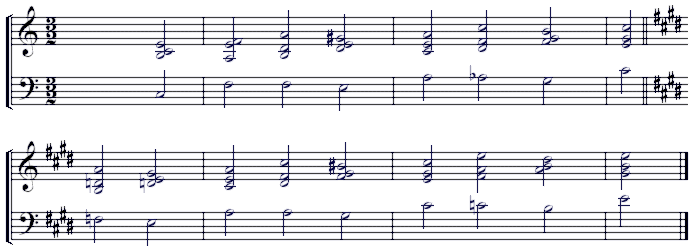
modu4-23a

Here a chord has been added at the beginning,
     to make a repeat of the Modulation to Am in the C circle,
          this time to A, the beginning of the E circle.
     With the exception of the D natural at the beginning,
          the E circle is an accurate transposition of the C circle, a major third higher.

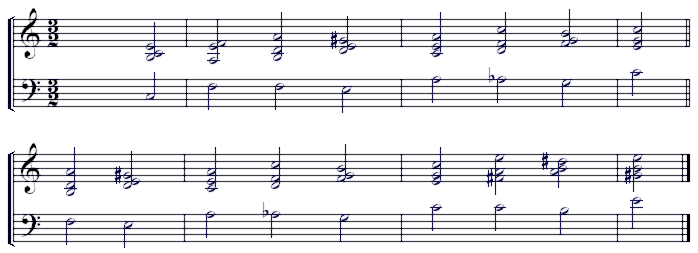
modu4-23a2

However, modulating all the way to a TONIC E Major might have been over-kill,
     when the E major involved here is evidently a DOMINANT of A minor,
               itself the relative minor of C major,
          and it might have been more appropriate to pass by A minor rather than by A major.

From C Major To F Major

This is also an evident Modulation, to the COUNTER-DOMINANT [IV].

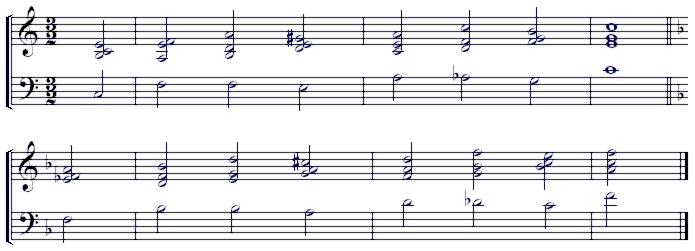
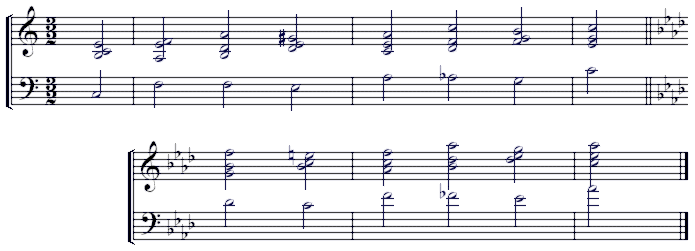
modu4-24a

With the exception of the E flat at the beginning,
     the F circle is an accurate transposition of the C circle, a fourth higher.

From C Major To Ab Major

Another less evident Modulation,
     to theShadowof the DOMINANTIZED COUNTER-DOMINANT [the flat majorVI(Ab)].
The COUNTER-DOMINANT [IV, more specificallyIV6 in theTONIC Swing] is F6
     DOMINANTIZED is Fm because the third is flattened in sixth chords,
               inversely to seventh chords,
          whoseShadow(relative major) is Ab.

modu4-26a

By repeating the last 2 chords of the C circle (G7 / C),
     we use them as ANTE 1 and DOMINANT in Fm (Gm7-5 C7 )
          and place them at the beginning of the last 6 chords of the Ab circle.
               The first 2 chords are left out, as was the case in the G circle.
     Otherwise the Ab circle is an accurate transposition of the C circle, a minor sixth higher.

Major To Minor


Previous Top Next