MusicNovatory / Applications / Composition / Modulation / M-m


Major To Minor

The choice of the 4 most pertinent and logical minor Keys seemed evident -
     first the3 minor chords of the Diatonic Window, the ANTEs,
          D Minor, A Minor, and E Minor, with preference to the relative minor,
     and then theDominantizedCOUNTER-DOMINANT [IVm] F Minor.

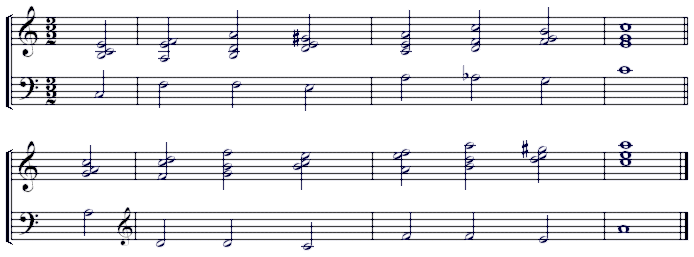
C Major To A Minor

The Key of A minor, as relative minor of the Key of C major,
     certainly deserves to be seen first.

modu4-16a

The A minor Circle, despite its melodic ternary appearance,
     has evidently maintained its original harmonic binary form,
          but the major cadence (G7- C+7, chords 3 and 4) has been even further attenuated.
One could not ask for a better melodic fit between the two circles,
     the A minor circle starting on the last note of the C major circle.

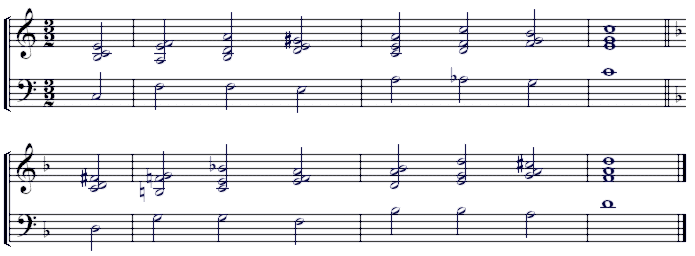
C Major To D Minor

modu4-12a

The D minor Circle has also maintained its original harmonic binary form,
          with the major cadence (C7- F+7, chords 3 and 4) also attenuated.
     In order to reach the Key signature of 1 flat, chords 1 and 2 areDominantized.

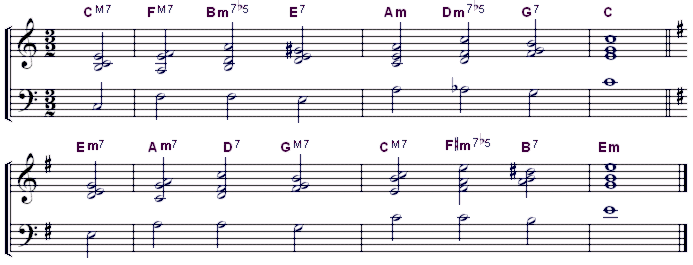
C Major To E Minor

modu4-13a

The E minor Circle has also maintained its original harmonic binary form,
          with the major cadence (D7- G+7, chords 3 and 4) also attenuated.
     In order to reach the Key signature of 1 sharp, chords 1 and 2 may be left diatonic,
          since they are common to the 2 Key signatures.

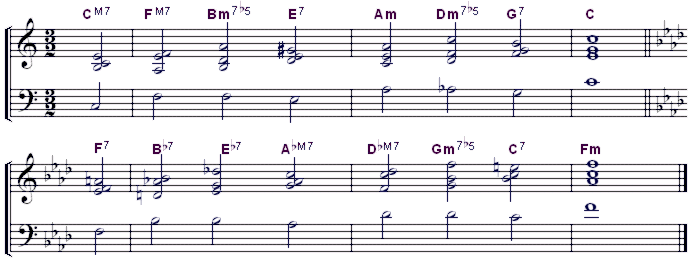
C Major To F Minor

modu4-14a

The F minor Circle has also maintained its original harmonic binary form,
          with the major cadence (Eb7- Ab+7, chords 3 and 4) also attenuated.
     In order to reach the Key signature of 4 flats, chords 1 and 2 areDominantized.

Minor To Major


Previous Top Next