Progressions by ascending second In Classes 1 and 2, we saw that progressions between Real Triads were by fifth, either
ascending or descending, with the predominance of the only truly strong progression,
the cadentialV-I. In Class 3, we saw theIV-Vprogression by ascending second which was later explained in the deceptive page. In
Class 4, we saw that theI-IIprogression was quite similar to theIV-Vprogression. In Classes 6 and 7 we dealt with progressions from a deceptive triad,
characterized by the caving in of the root (and fifth) with the result that the deceptive
triad resolved perforce to the chord one step higher, which we termed progression
by ascending second. In this class, we will see the possibility of a descending second
progression between a Real Triad and a deceptive triad. All this of course, within
the restriction of having triads (Real and deceptive) only in root position.
I-vii-I
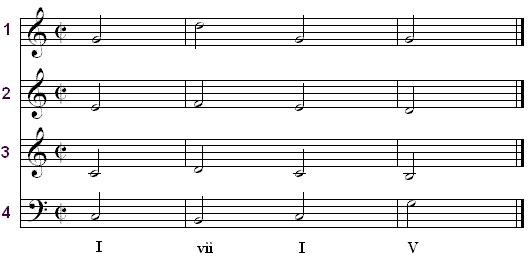
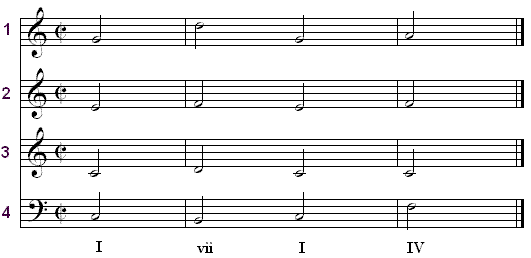
Doubling and Voice-leading Lines It is possible for the Real TriadIto progress to the deceptive triadvii because the Root is free, being a primary note of the basicI6Tetrad. The deceptive triadviimust, by caving in, return toI. ThisI-vii-Icould be preceded byI, producingI-I-vii-I, a valid and useful antecedent (a). ThisI-vii-Icould also be followed by either - V, producingI-vii-I-V, orIV, producingI-vii-I-IV, also valid and useful antecedents (a). In VLL 1, the D could be placed an octave lower if the crossing with VLL 2 is averted, by placing these two VLLs in the soprano and tenor voices. VLLs 2 and 3 are in opposite motion to VLL 4. The disposition of the two chords ofIare identical, each of the four VLLs returning to its original note.
IV-iii-IV
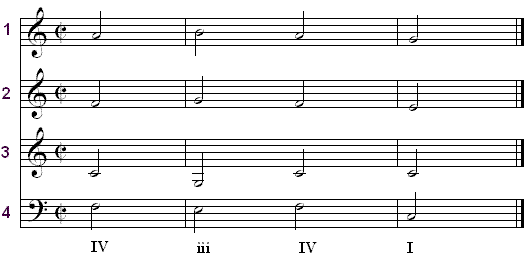
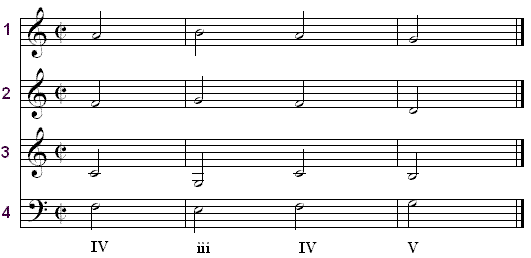
Doubling and Voice-leading Lines It is also possible for the Real TriadIVto progress to the deceptive triadiii because the Root is free, being a primary note of the basicIV6Tetrad. The deceptive triadiiimust, by caving in, return toIV. ThisIV-iii-IVcould be preceded byI, producingI-IV-iii-IV, a valid and useful antecedent (a). ThisIV-iii-IVcould also be followed by either - I, producingIV-iii-IV-V, orV, producingI-vii-I-IV, in this caseaCantecedents (in the third quarter). In VLL 3, the G could be placed an octave higher to prevent crossing with VLL 1. VLLs 1 and 2 are in opposite motion to VLL 4. The disposition of the two chords ofIVare identical, each of the four VLLs returning to its original note.
Exercises
Exercise 1 With theI-vii-I-Vchord pattern asaand theV-vi-vii-Ichord pattern asc, and with line 4 in the bass voice (CBCG GABC), any version of either pattern may be used. In the soprano voice, any VLL may be placed in the antecedent (a), and a VLL which ends on the note C will be placed in the consequent (c), for a strong cadence. With theaending onVand thecstarting onV, there is no problem of resolution between the two sections. In the alto and tenor voices, the remaining VLLs will be placed. Transposition may be required for vocal performance.
Exercise 2 With theI-ii-iii-IVchord pattern asaand theIV-iii-IV-Ichord pattern asc, and with line 4 in the bass voice (CDEF FEFC), any version of either pattern may be used. NOTE the weak "plagal" cadence of thec, which would limit this pattern to be used either as an antecedent or as a coda. In the soprano voice, any VLL may be placed in the antecedent (a), and a VLL which ends on the note G will be placed in the consequent (c), for a slightly stronger cadence. With theaending onIVand thecstarting onIV, there is no problem of resolution between the two sections. In the alto and tenor voices, the remaining VLLs will be placed. Transposition may be required for vocal performance.