|
|
| home | news | cq | clips | color | definitions | rcode | chord symbols | numbering | contribution |
| MusicNovatory / Applications / Composition / Modulation / m-m |
|
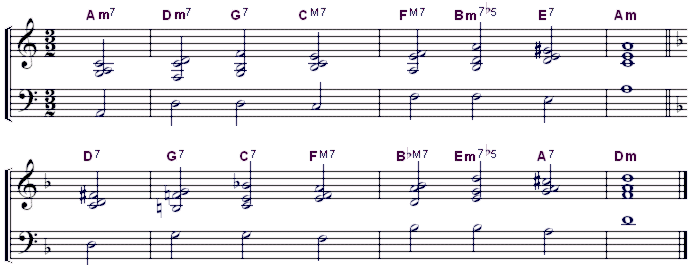
There is only 1 possibility here, from A Minor to D Minor.
It was current practice, in the first half of theXVIIIth century, A Minor To D Minor
The D Minor Circle has also maintained its original harmonic binary form, Conclusion Strength Of Modulations To theModuCode Back toHome |
| Previous | Top | Next |
| sitemap | Copyright © 1971-2026 Cosmos-Square Inc. ALL RIGHTS RESERVED. - Powered by DNAOS | contact |