FormAAAA BBAA BBAA BBAA In a 4-section fugue, it is preferable : (a) to make a strong cadence in the middle, at the end of the first BBAA, and at the end, after the last BBAA ; (b) to avoid cadencing at the end of the AAAA and the second BBAA. The second BBAA will be in theflattening Chromatic Minor Mode. Chord Pattern -M3-4andm3-4
It is often possible and even useful to have the S1 and the S2 in the same direction, even if the fundamental progressions are in the opposite direction; this procedure seems a little marginal here, in this fugue course, but it was common practice in the classical fugue. It will impose changes between the S1 and the S2, called "mutations" in traditional fugue.
Choral Disposition Of The Fugue-lines
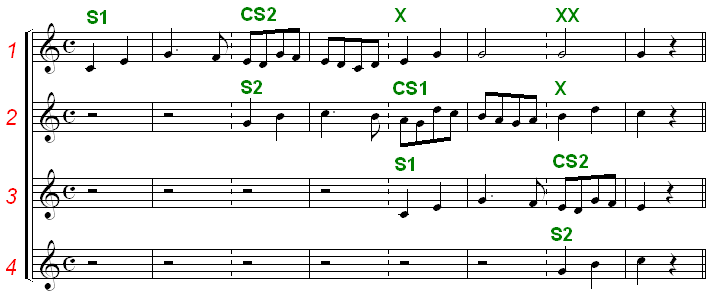
As S1, we have chosen the three first notes of the last movement of Beethoven's Fifth Symphony. Instead of having an exact correspondence of orbits, we have here, between the S1 and S2, a correspondence of functions, root and third of the TONIC followed by the root of the DOMINANT in
the S1, root and third of the DOMINANT followed by the root of the TONIC in
the S2, which produces different intervals, a leap of a fourth in the CS2 and of a fifth in the CS1.
NOTE - the substitution formula (of Orbit 3) with a non-chordal tone, in the CS. displacements of the median between the S and the first X.
For the strong cadence at the end of the first and last BBAA : Fugue-line 2, with Orbits1-1, in the Soprano ; Fugue-line 4 in the Tenor ; Fugue-line 1, as theFundamentalBass ; Fugue-line 3 in the Alto.
Divertimenti
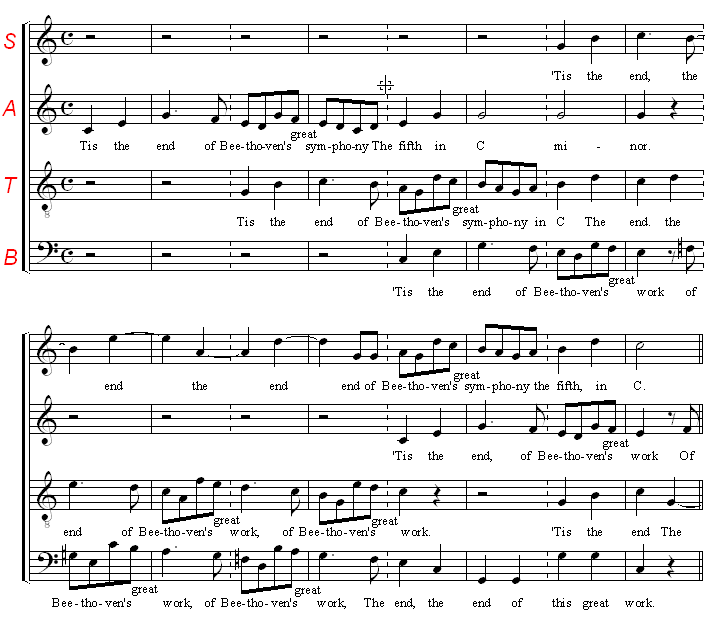
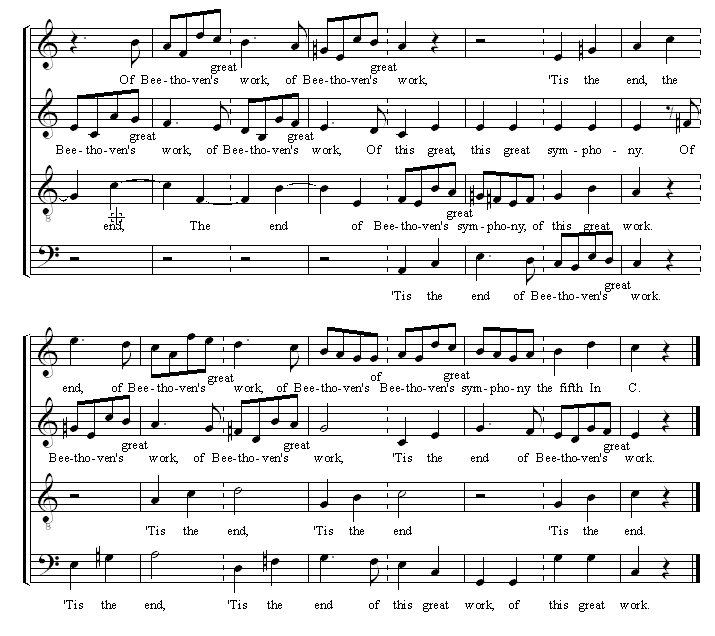
Three Divertimenti of length BB, four chords, ending on the DOMINANT. Chord Pattern - half-circle, major for the first and third, minor for the second. The two first Divertimenti in 3 voices,Voice-leading C, plus an extra line, the third in four voices, two 2-voice canons with Voice-leading C. The two first Divertimenti use the Counter-subject as motif, the third uses both the Subject and the Counter-subject. See the complete fugue.