FormAAAA BBAA BBAA, a ternary form at the large level. Chord PatternM7-4, inDiatonic (flattening) Major, with the central section in the relativeChromatic (flattening) Minorm7-4. In the preceding chapters, the S1 and the S2 were structured on chord patterns of
opposite directions; the melodies of the S1 and S2 were also in contrary motion. In
theM7-4pattern, we will find two progressionin the same direction, both flattening; the S1 and S2 melodies will also be in the same direction. The
middle part of the fugue will also be in the same direction, on them7-4pattern. Subject - the well-known
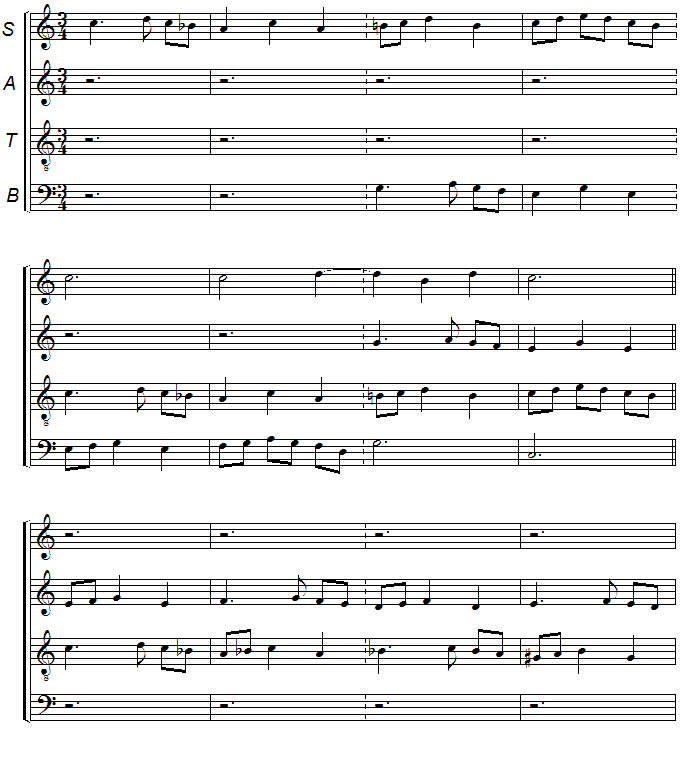
Ach, du lieber Augustin. Divertimenti in 2 voices with both Subject and Counter-subject together
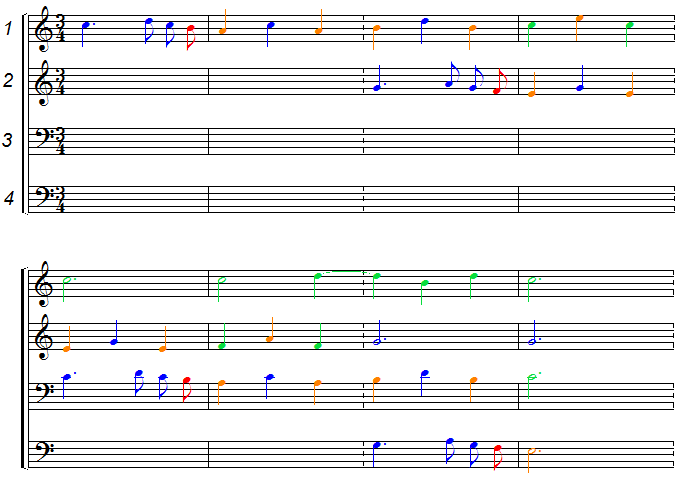
Choral Disposition of The Fugue-lines
NOTE the displacement of theMEDIANin each bar.
For the strong cadence of the AAAA - Fugue-line 1 with the Orbit-line1-1 in the Soprano voice, Fugue-line 2 with theFBin the Bass voice, Fugue-line 3, in the same direction as Fugue-line 1, in the Tenor voice, and Fugue-line 4 in the Alto voice. The static harmonic Primary Note lines exposed in the outer voices (S and
B) and the kinetic polyphonic Secondary Note lines concealed in the inner voices
(A and T). See the AAAA of the complete fugue.
Divertimenti
The first Divertimento has the Subject in the Tenor and the Counter-subject in the Alto. The second Divertimento has the Subject in the Soprano and the Counter-subject in the Bass, with the fifth of each chord added in the Alto. See the Complete fugue.
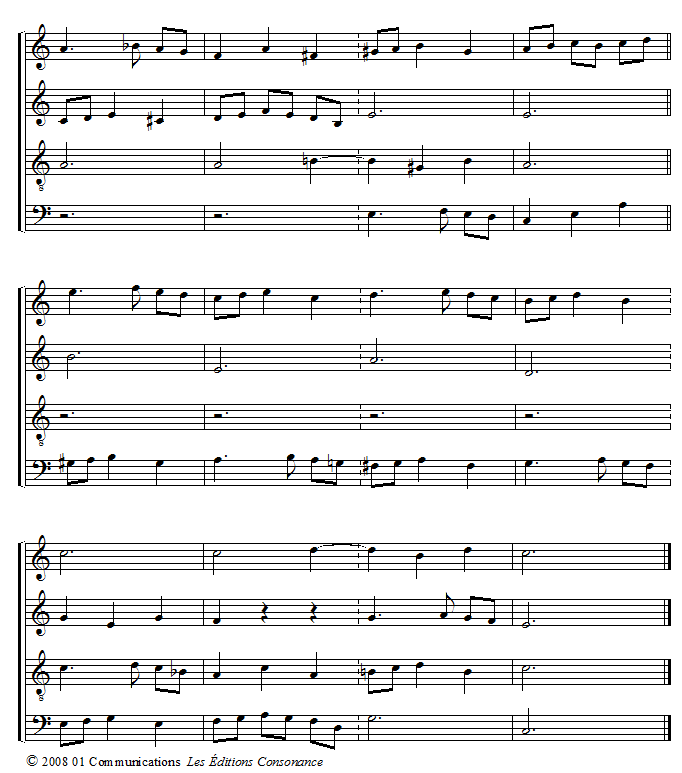
The Complete Fugue
NOTE - the addition of a passing tone at the start of each Counter-subject to create
movement, as well as the 1/8 notes in the following bar; the link between the S1 and the S2 (in the Soprano), where the harmonies change,
is not the same as between the S2 and the CS1 (in the Bass) where one remains on the
TONIC chord; the end of the Counter-subject will also be slightly changed.
To dispose the central AA, which is in chromatic minor, no inversion is required since
both modes are in the same direction; only the inversion of the voices S-T and A-B
in the last AA.