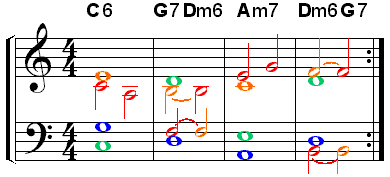
Metamorphosis 2 is usually presented closed, in either form (first or last). The chord changes: - its direction; - its position in the series of fifths (1FRAMEaway); - the swing to which it belongs; (2 fifths away - with the metamorphosed chord in interior positions); - the note which acts asOrbit 0(theCOMMON TONE); -Orbit 2andOrbit 3replace each other, - the note which wasOrbit 2becomesOrbit 3and that which wasOrbit 3becomesOrbit 2.
-We have here the following chords: C6- with aSubstitution1(3), followed by theMOTRIXA, in the Alto; G71Dm65- Metamorphosis 2 - with a Substitution 1(0), in the Bass which removes both the G,Orbit 0of G71and the A,Orbit 0of Dm65. Each of these two notes serves asOrbit 0on one chord and as aNon-chordal ToneofOrbit 0on the other. By having the chord Incomplete we avoid this incompatibility altogether. Am7- with a Substitution 1(3), followed by theMOTRIXG, in the Soprano; Dm65G71- Metamorphosis 2 - with a Substitution 1(0), in the Tenor. The chords of Rest (on the Beat), C6and Am7, were first presented as Real Triads to differentiate them from each other.