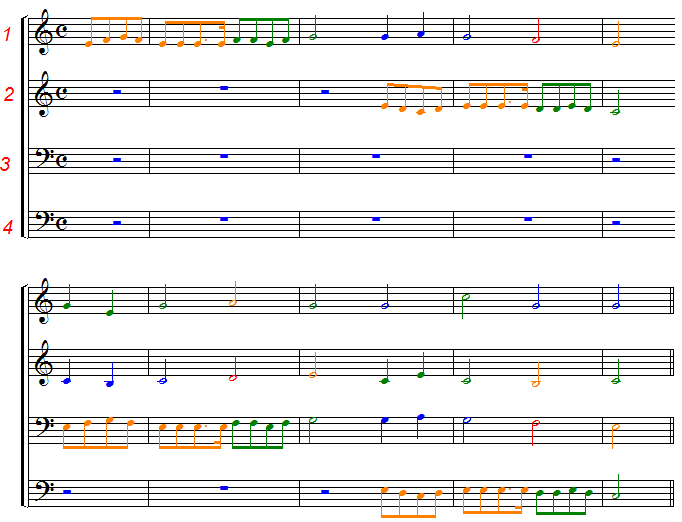
FormAAAA BBAA BBAA, a ternary form at the large level. Chord PatternM56-54, an extension of the previousM6-4pattern - Subject - the fugues of classes 5 and 6 were built using a known melody as S1; it is also possible to use a melody as the S2, its inversion becoming the preceding S1. We will here useMary Had A Little Lambin this manner, its second half acting as S2, inverted as S1. The symmetry is the same as in Class 6, so check the orbits carefully. The subject using the1-1orbit line, the Counter-subject will use the preferential3-2orbit line, the first "X" the2-1line and the second "X" the0-0line.
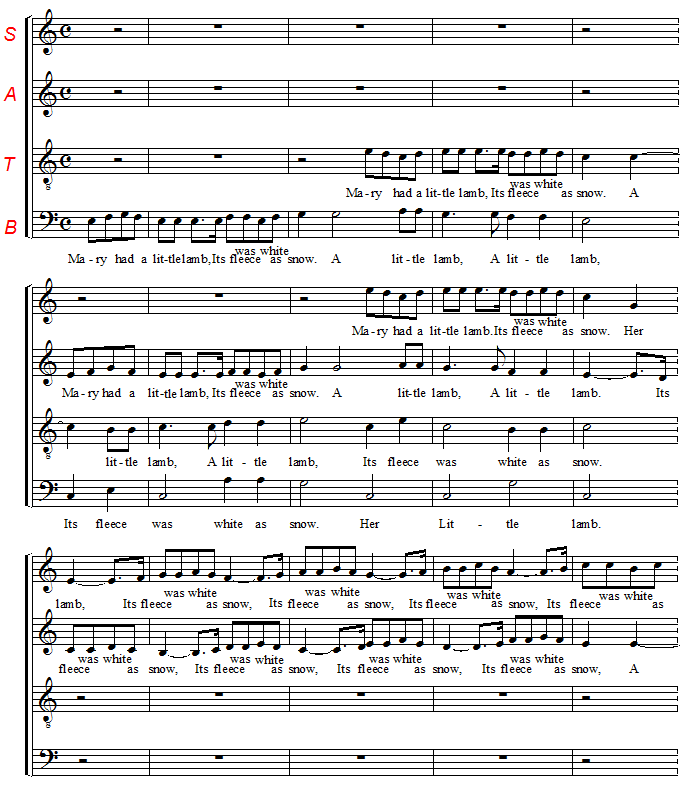
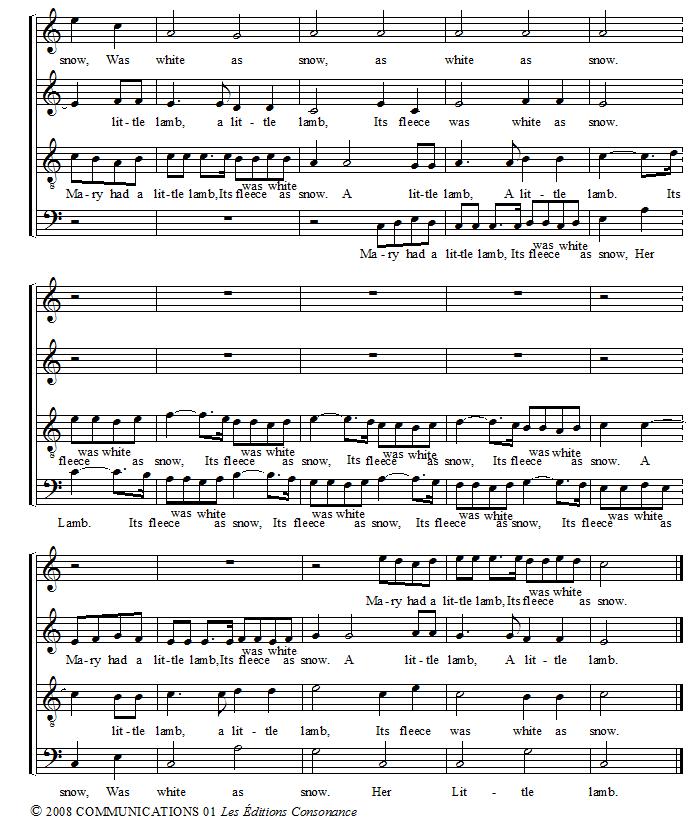
Choral Disposition of the Fugue Lines
NOTE the embroidery at the beginning of the Counter-subject which produces the preferred sonorities with the Subject. NOTE also the consecutive fifths (fourths) between the Counter-subject and the first
"X" which we might preferably eliminate or, at least, camouflage, these consecutive fifths being quite acceptable if the second is diminished. NOTE, at the beginning of the first "X", a displacement to recuperate theMEDIANfrom the Subject. NOTE, at the beginning of the second "X", a displacement to avoid interfering with the embroidery in Fugue-line 2. The last half of this AAAA with serve for the final AA.
Choral Disposition for the strong cadence of the AAAA - Fugue-line 4 with its1-1must be in the Soprano voice, imposing Fugue-line 1 for theFB, Fugue-line 2 for the corresponding Tenor voice in the same direction, and Fugue-line 3 for the remaining Alto voice, assuring that the static harmonic Primary Notes are exposed in the outer
voices, and that the kinetic Secondary Notes are concealed in the inner voices.
Use of a new mode - The central AA will be in diatonic sharpening minor (Mode 2), and the opening AAAA as well as the closing AA will be in diatonic major. The transformation into the new mode is made by inverting Soprano with Bass and Alto with Tenor.